Most brands have a strategy. Few have a rule that enforces it. Brand Filters are the guardrails inside the Minimum Viable Brand system — protecting your strategy decisions and your design decisions as the brand grows.
This article explains what they are, how the veto mechanism works, how Tony's Chocolonely built a brand nobody can copy using a single filter, and how to build and deploy yours across five decision points — in sixty seconds flat.

You Already Have a Filter. It Just Doesn't Work. You know what your brand stands for. You've said it out loud. Maybe written it down. And yet — last month you approved something that didn't quite fit. A campaign that chased a trend you don't own. A feature the sales team pushed for because one client asked. A partnership that made commercial sense but muddied your message.
The filter was there. It just didn't fire.
That's the problem this article is about. Not building a brand strategy — but making sure it actually governs decisions once it exists.
A Brand Filter is simply a rule your brand lives by — and refuses to break. Most brands have them in principle. Very few enforce them in practice. The ones that do build something their competitors can't replicate, no matter how much money they spend.
Knowing what you stand for isn't enough. You need a rule that actually stops things.
CHAPTER 1
What a brand filter is
A Brand Filter is a guardrail — not a guideline.
Guidelines describe what your brand looks like. Filters decide what your brand does and doesn't do. One is passive. The other stops things.
Your brand has two types of decisions that need protecting:
1. Strategy decisions
who you're for, what problem you solve, how you're positioned, what you promise.
2.Design decisions
how you look, how you sound, what your visual world feels like.
Brand Filters protect both.
A strategy filter asks: does this decision match who we said we are? A design filter asks: does this look and sound like us?
Three questions sit behind every filter:
What must never change?
The rules that are load-bearing. Break these and you become a different brand.
What can flex?
The room your team has to adapt — different tones for different channels, different layouts for different formats.
What must scale?
The things that need to work the same way whether you have 5 people or 50.
Simple in theory. Hard to enforce in practice — because enforcing a filter means saying no. And saying no is uncomfortable, especially when the pressure to say yes is coming from a client, an investor, or your own sales team.
CHAPTER 2
Why most filters never fire
Here's what usually happens. A founder gets clear on their positioning. They document it. They share it. Everyone nods. And then — slowly, decision by decision — the brand starts doing things that contradict it.
Not because people are careless. Because the filter is passive.
A passive filter says: here's who we are, please keep this in mind. An active filter says: before this gets approved, it has to answer one question.
That question is: Which part of our strategy does this serve, and if the answer is none of them, why are we doing it?
That's the veto. It flips the default from yes to no. Work doesn't proceed until it earns its approval. Not by being good — by being traceable to the brand's strategy.
Who holds it
One person. Not a committee. Committees produce consensus. Consensus produces generic brands. The veto needs to live with the founder or whoever has both the strategic authority and the closest relationship with the customer. Their job isn't to be popular — it's to hold the line when the pressure to make exceptions is loudest.
CHAPTER 3
A brand that built everything on its filter
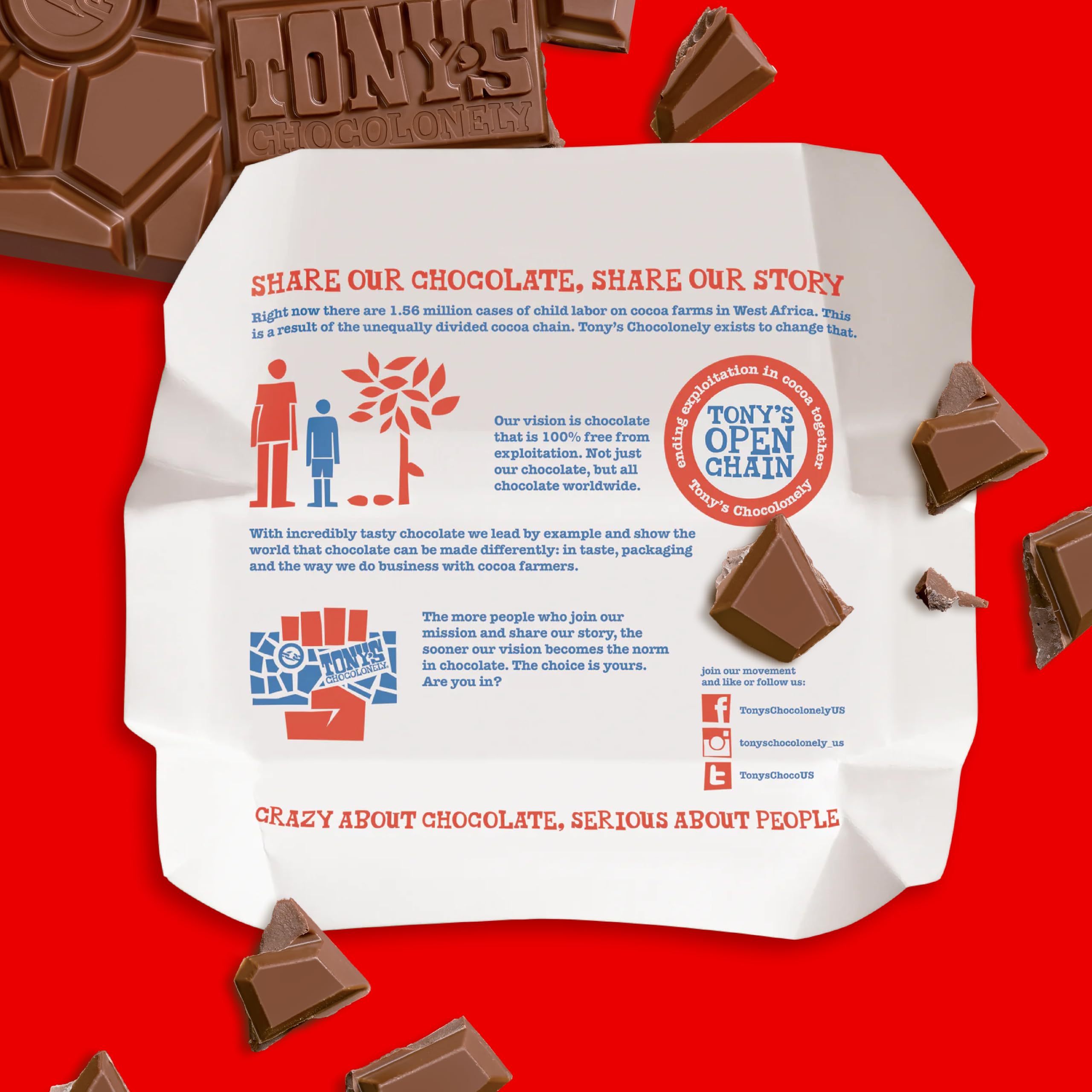
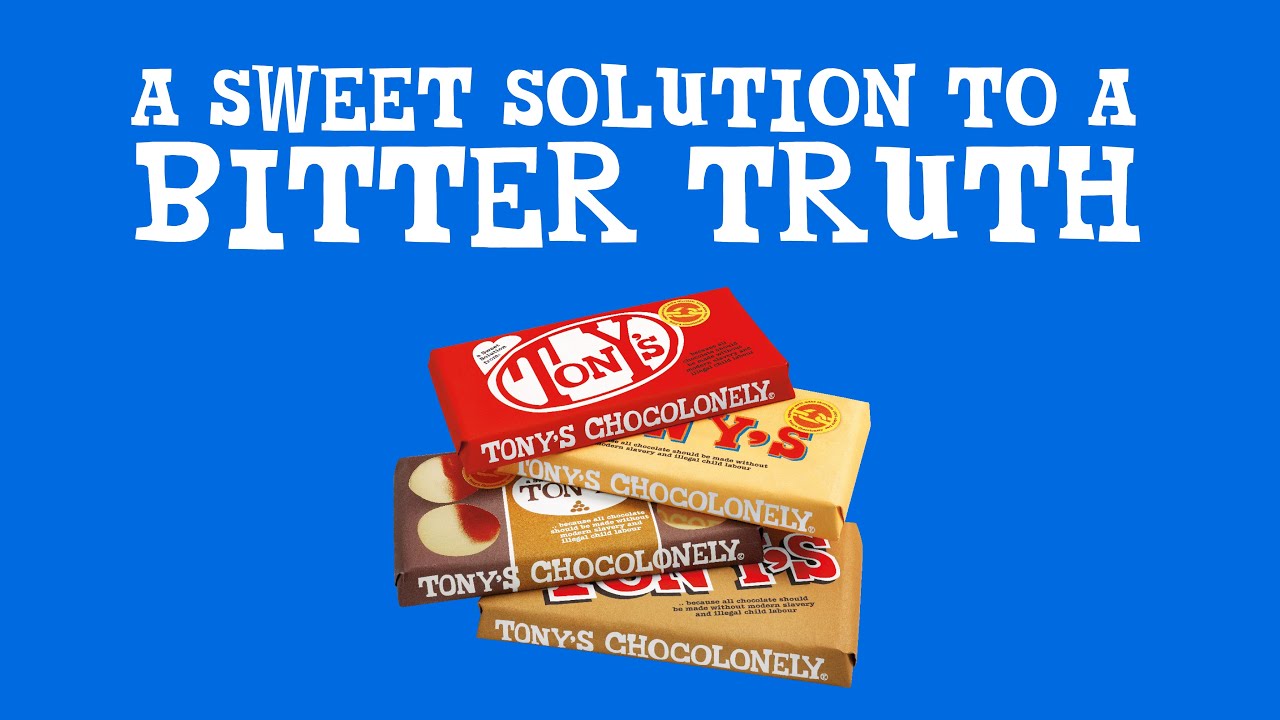
Tony's Chocolonely started in Amsterdam in 2005. The founder, a Dutch journalist, investigated child labour and modern slavery in West Africa's cocoa industry. What he found disturbed him so much that he tried to have himself arrested for eating a chocolate bar, arguing he was guilty of purchasing a product made by slaves.
When the courts wouldn't prosecute him, he built a chocolate company instead.
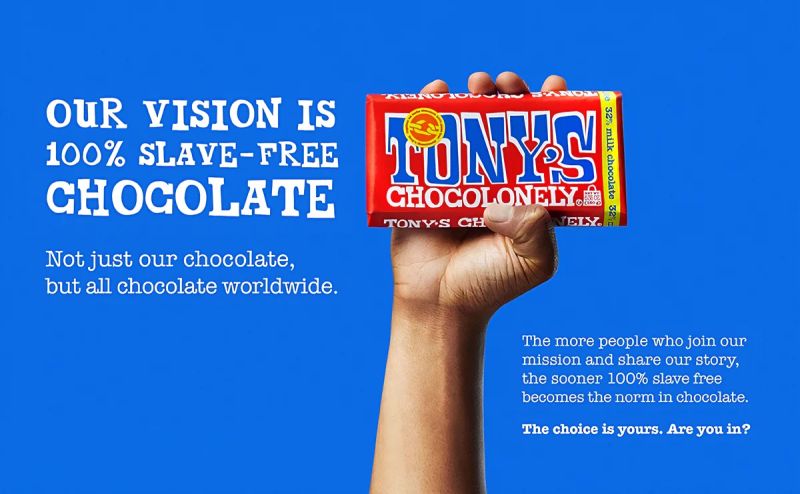
His filter was simple: does this move us closer to 100% slave-free chocolate as the norm, or does it make us comfortable with the problem?
That one question has governed every decision they've made since. Here's what it produced:
The bar shape
Tony's bars have unequally divided pieces. to symbolise inequality in the industry. No market research recommends breaking a category convention like this. The filter insisted on it.

The packaging
Loud, bright, and deliberately NOT designed to look like a worthy ethical product. Why? Because packaging that signals sacrifice repels the people who could become believers.

Zero advertising spend
Tony's became market leader in the Netherlands without ever running a paid ad. The filter: every euro on a billboard is a euro not spent in the supply chain.
The legal structure
Tony's is legally structured to prevent acquisition by companies that don't meet their sourcing standards. The most lucrative exit in chocolate is structurally impossible. The veto is in the company's constitution.
When US market research showed that American consumers ranked taste and price above ethical sourcing, the obvious commercial response was to soften the mission. Lead with flavour. Compete on conventional terms.
Tony's didn't. Because abandoning the filter would destroy the one thing no competitor can replicate, twenty years of decisions that prove they mean it.
Cadbury can copy the chocolate. They cannot copy the filter.
Person:
The consumer who suspects their chocolate has a cost they're not seeing. Can Cadbury say this? No. Cadbury is built to not ask the question.
Pain:
An industry that assumes consumers don't want to know where their food comes from. Can Cadbury say this? Only if they're willing to indict themselves.

Purpose:
Slave-free chocolate should be the norm. Every major competitor looks complicit. Can Cadbury say this? Not without lying.
Positioning:
The only brand with a traceable supply chain and a structure that blocks a dirty exit. Can Cadbury say this? Not without rebuilding their entire operation.

Promise:
From unknowingly funding a broken system — to actively dismantling it. Can Cadbury say this? Not if they want to keep selling the way they do.
Proof:
€190–210M revenue across 30+ markets. No ad budget. Twenty years of supply chain receipts. Can Cadbury say this? No. You can't replicate twenty years of documented decisions.
The test Tony's uses is brutal in its simplicity: can Cadbury say this? After twenty years, the answer is still no. That's the filter working.

Most founders have a strategy. Almost none have a rule that enforces it. If you read the Tony's story and felt the gap between what they built and where your brand currently is, that gap has a name. And it's worth a conversation.
Book a Free Vision Clarity Session →
CHAPTER 4
How to build your filter
Your filter comes directly from your brand strategy — specifically from the six Ps in your Strategy on a Page. You're not inventing new rules. You're sharpening the ones you've already made into something that can stop a decision in its tracks.
Three steps:
Step 1 : Define what can never change
Go through your six Ps and ask: if this changed, would we still be the same brand The Ps that answer yes are your non-negotiables.
Write each one as a decision, not a value:
Not: 'We serve ambitious founders.' But: 'If this person isn't experiencing the specific problem we named, this work isn't for them.'
Not: 'We're different from our competitors.' But: 'If a competitor can say this without changing a word, we delete it and start again.'
Step 2: Define what you refuse to claim
Your brand has a villain, the status quo, the old way, the industry lie your customer is trapped in. Write down what you will never say, sell, or imply because it contradicts that. Most brands are afraid to do this. They want to leave room for everyone. But a brand that refuses nothing stands for nothing.
Example:
A project management tool whose villain is 'corporate chaos'. They refuse to add features that create more notifications, more meetings, more tracking. Even when clients ask for them. Especially when clients ask for them.
Step 3: Apply the Kill Test to everything
One question. Applied to every piece of work before it gets approved: Can our direct competitor say this, and mean it? If yes, delete it. Don't revise it. Delete it and go again.
This works for both strategy and design decisions.
— Can a competitor use our layout?
— Can they make this promise?
— Can they claim this positioning?
If yes, you haven't drawn a line, you've described the category.
The 60-second check
Once your filter is built, anyone on your team can run this before anything gets approved or published:
— 01.
Does this serve the specific person we defined, or are we broadening to catch more people?
— 02.
Does this fight the villain we named, or does it ignore it?
— 03.
Can a competitor say this with their name in place of ours?
If it fails any of these, it goes back. Not for revision. Back to the brief.
CHAPTER 5
Where to use it
A filter only works if it fires at the right moment. There are five points in any growing business where brand-diluting decisions are most likely to slip through:
1. Before any campaign or content is briefed
One question gets added to every brief: which part of our strategy does this serve? If the answer is vague, the brief goes back. Vague brief, vague work — and vague work always fails the Kill Test downstream.
2. Before you hire
Every hire is a brand decision. Not because everyone needs to be a marketer, but because everyone makes decisions that either reinforce or quietly erode what you stand for. Ask: does this person instinctively reach for specificity, or do they default to broad appeal? A great salesperson who softens your positioning will cost you more than an empty desk.
3. Before any partnership or collaboration
Before the commercial conversation goes further, ask: does associating with this partner strengthen or muddy our positioning? You're not just lending your logo. You're borrowing their associations. Where you sell is also a brand decision — a premium brand in a discount channel sends a signal you can't easily undo.
4. Before any new feature or product is scoped
Product teams are closest to individual customer requests and furthest from the brand strategy. The filter question: would the specific person we defined in our strategy experience this as solving their problem? One loud client is not a market signal. The filter exists precisely to stop the brand from being reshaped by whoever was in the last sales meeting.
5. Every quarter — review, don't revise
Set a quarterly review date. The filter changes only when something in the market has genuinely made part of your strategy wrong — not when the team is bored, not when a new hire has opinions, not when a consultant suggests a refresh. The test: can you point to a specific thing that happened in the market that made part of your strategy factually incorrect? If yes, update. If no, hold.
CHAPTER 6
When it gets hard
The filter is easy to use when business is good. It gets hard in three situations — and these are exactly the moments most brands abandon it.
When investors push you to broaden
Investors want a bigger market. Filters create a smaller one — on purpose. When someone asks "why are you limiting yourselves?", the answer is: because a brand that tries to serve everyone ends up meaning nothing to anyone. The 10% who need you precisely is more valuable than the 90% you could theoretically reach by diluting what makes you different. Your filter doesn't change because a slide deck needs a bigger number.
When a slow quarter makes adjacent customers look attractive
"We're just being flexible for one quarter" is how brand drift starts. Then the next quarter. Then the messaging shifts to accommodate the new customers. Then your original customers stop recognising you. The distinction: serving an adjacent customer as a one-off tactic is fine. Rewriting your strategy to justify them is drift. The filter tells you which one you're doing.
When a competitor makes a move
A competitor launches something new and the instinct is to respond — match the feature, counter the campaign. But brands that react to every competitor move have quietly outsourced their strategy to someone else. Run the Kill Test first. If their move doesn't actually close your positioning gap — if you're still the only one who does it your way — the right response is to do nothing. Stay the course.
Your strategy changes when the market proves it wrong. Not when staying the course feels uncomfortable.
CLOSING
The rule that builds the brand
Most founders know what their brand stands for. The gap isn't knowledge — it's mechanism. No system that makes the right call automatic, instead of depending on whoever happens to be in the room that day.
A Brand Filter closes that gap. It's not a document. It's a rule with teeth — one that stops things before they get built, published, or signed.
Build the strategy first. Then build the filter that protects it. Then put it somewhere everyone can use it — in the brief, in the hiring process, in the partnership conversation, in the product review. The brands you respect most didn't win by being louder or spending more. They won by saying no more consistently than everyone else. Every no compounded. Every time the filter fired, it reinforced what they stood for.
The strongest brands didn't win by saying yes to more. They won by making their no mean something.
If you don't have a brand strategy yet, the filter has nothing to protect. Start there first, then come back to this.
If you have the strategy but no filter, you have the architecture without the security system. Build it before the next slow quarter forces the question.
If this article made you think about your own brand, that's worth a conversation.
Book a Free Vision Clarity Session →